
Average Time to Fill Clinical Roles: Benchmarks & Speed Up Tips

Hiring clinical talent is one of the highest-impact tasks health leaders manage. Long vacancies strain patient access, increase burnout, and slow program growth. In this article we break down the typical timelines for filling clinical roles and give practical steps you can use today to shorten them. Bold the one-off phrase? No, instead here we clearly address the key metric: average time to fill clinical roles and how to bring that number down without sacrificing fit.

Why time-to-fill matters for clinical teams
Vacant clinical roles directly affect access to care and revenue. When a therapist, psychiatrist, or nurse practitioner is missing from the schedule, waitlists grow and existing staff shoulder more patients. Beyond clinical risk, long hiring cycles mean higher total recruiting costs and lost productivity.
Key costs of long vacancies:
- Increased overtime and burnout among remaining staff.
- Lost billable visits and delayed program launches.
- Higher chance of offer rejection if your process drags.
Benchmarks help you prioritize. Across broad recruiting studies, the U.S. average time-to-fill for all industries sits around 35 to 40 days, while healthcare commonly runs longer. For clinical roles you should plan for a wider range depending on licensure, specialty, and location.
Typical benchmarks by role
- Entry-level clinical support, e.g., behavioral technicians: 21 to 45 days.
- Licensed therapists and counselors: 30 to 75 days depending on licensure and local supply. See clinical recruitment approaches at Aspire's Clinical Recruitment page for more. (Clinical Recruitment)
- Nurse practitioners and RNs: commonly 45 to 90 days due to credentialing and scheduling constraints.
- Psychiatrists and highly specialized prescribers: often 90 to 180+ days, sometimes longer for rare specialties.
- Executive clinical leadership roles: 75 to 150 days depending on confidentiality and the scope of the search. Learn about Executive Leadership Recruiting approaches here. (Executive Leadership Recruiting)
For national-level benchmarks and recent industry summaries see SmartRecruiters and other hiring platforms that track healthcare hiring speed. (SmartRecruiters healthcare benchmarks)
What extends the timeline for clinical hires
Several predictable factors lengthen time-to-fill in behavioral health and clinical settings:
- Credentialing, privileging, and state licensure steps.
- Complex interview panels with multiple stakeholders.
- Low candidate volume in rural or underserved regions.
- Non-competitive or unclear compensation packages.
- Slow scheduling and decision cycles inside the hiring team.
Understanding the specific blockers in your process is the first step to shortening it.
Practical levers that shorten time-to-fill
1. Triage by clinical impact
Decide which roles are mission-critical and allocate recruiting resources accordingly. Prioritize prescribers and licensed therapists who reduce waitlists fastest.
2. Build and nurture a warm pipeline
Keep a network of alumni, interns, and former applicants active so you can engage quickly when a role opens.
3. Streamline interviews and decision-making
Limit rounds to two or three structured conversations, and schedule decision windows. Fast offers win candidates.
4. Use targeted sourcing and specialized partners
Industry-focused recruiters accelerate movement for niche clinical roles. Aspire Recruiting Partners places clinicians and leaders nationwide and can help shorten timelines for hard-to-fill roles. (Operations & Support Staff Recruiting)
5. Offer flexible role designs
Consider part-time, telehealth, or shared-FTE models to expand your candidate pool quickly.
6. Speed credentialing and onboarding
Audit your credentialing workflow to remove unnecessary delays and run parallel checks where possible.
Measuring success: the right metrics
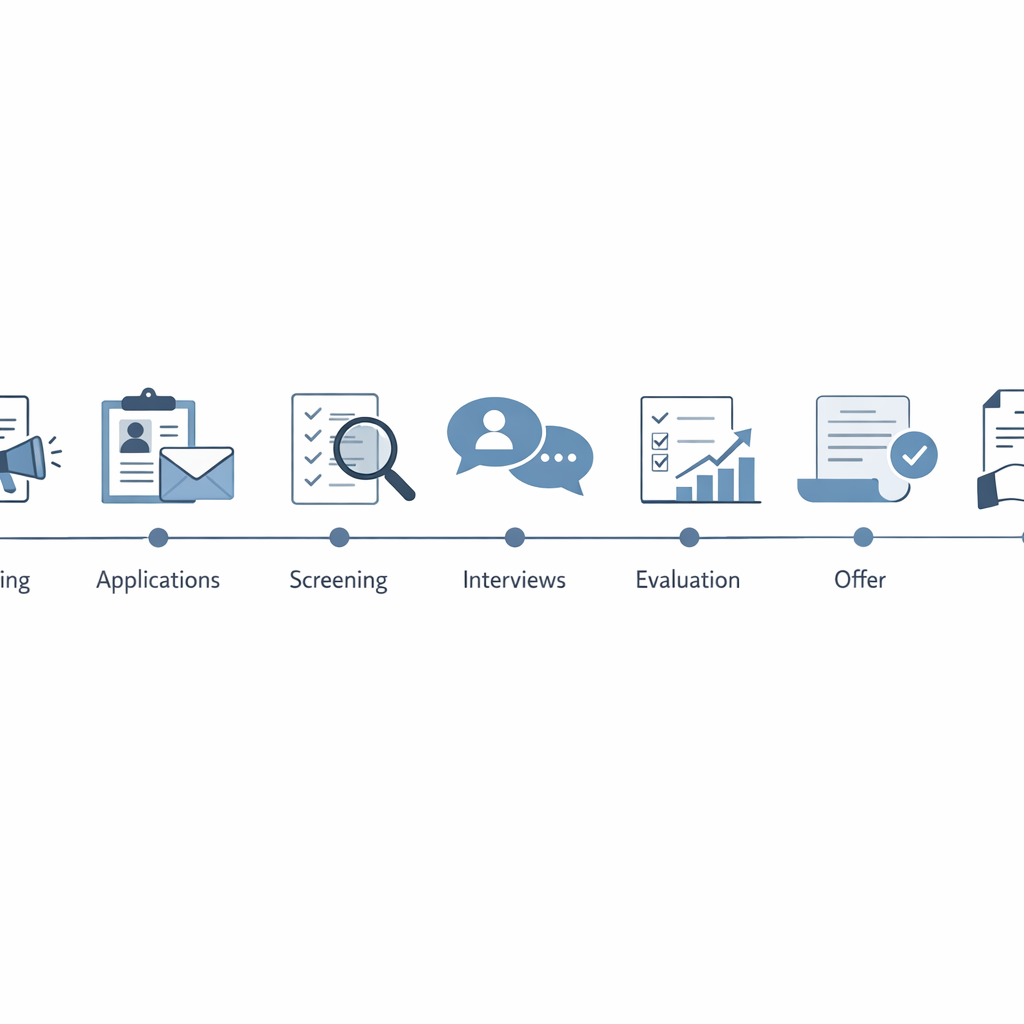
Track both time-to-fill and time-in-stage. Time-to-fill measures the full clock from opening to accepted offer. Time-in-stage reveals bottlenecks like screening, interview scheduling, or reference checks. Aim to reduce the longest single-stage delay first.
KPIs to monitor:
- Average time-to-fill by role family (therapists, prescribers, nursing).
- Time from first interview to offer.
- Offer acceptance rate and reasons for declines.
- Cost-per-hire and vacancy cost per day.
Real-world examples and quick wins
- Tighten interview panels to two decision-makers and a panelist for culture fit. That change alone often cuts 10 to 20 days off the process.
- Launch targeted outreach to local training programs for early-career therapists, producing a ready pipeline in months, not years.
- Use short-term contracted coverage while you recruit for permanent placements to protect access to care.
Frequently asked questions
What is a realistic average time to fill clinical roles right now?
Expect variance: broadly, 30 to 90 days for many clinical positions, while psychiatrists and highly specialized prescribers commonly take 90 to 180 days. Benchmarks from hiring platforms place healthcare around 35 to 50+ days depending on the dataset. For role-specific guidance, consult clinical recruitment specialists. (Clinical Recruitment)
How much does geography affect time-to-fill?
Greatly. Rural and underserved regions often see longer timelines due to smaller talent pools and relocation reluctance. Urban centers may move faster but face more competition for candidates.
Can a recruiter really shorten time-to-fill?
Yes. Specialized recruiters provide access to passive candidates, speed initial screening, and manage candidate engagement, often reducing time-to-fill materially for niche or executive roles. (Executive Leadership Recruiting)
Which stages usually cause the biggest delays?
Scheduling interviews across busy clinicians, lengthy credentialing and licensing checks, and slow internal decision-making are common culprits.
Should we hire temporary clinicians while recruiting permanent staff?
Yes. Temp-to-perm or locum coverage protects access to care and gives you breathing room to run a deliberate search for long-term fit.
How do I benchmark our hiring speed internally?
Start by tracking time-to-fill by role family and compare month over month. Then drill into time-in-stage to find the slowest step.
What role does compensation play in time-to-fill?
A significant one. Unclear or noncompetitive compensation leads to higher decline rates and longer searches. Be transparent about salary ranges where possible.
Ready to shorten your time-to-fill
If long vacancies are disrupting care, consider a targeted recruiting partnership. Aspire Recruiting Partners specializes in placing clinical, executive, and operational talent across behavioral health and addiction treatment settings. Reach out to discuss timelines and strategies specific to your openings: call (602) 751-8828 or visit our contact page. (Contact Aspire Recruiting Partners)
Conclusion
Long hiring cycles are costly and avoidable with focused process changes and the right recruiting partner. Measure your bottlenecks, prioritize by clinical impact, and use targeted sourcing, flexible role designs, and streamlined interviews to cut days off your average time to fill clinical roles. Small, consistent improvements add up to faster hires and better patient access.
About Aspire Recruiting Partners
Aspire Recruiting Partners is a Scottsdale, Arizona–based recruiting firm specializing in mental health and behavioral health talent acquisition nationwide. We place leaders, clinicians, and support staff who align with mission and culture. Our services include Executive Leadership Recruiting, Clinical Recruitment, Operations & Support Staff Recruiting, and Sales & Marketing Recruiting.
Get in touch:
📞 Call (602) 751-8828
📧 Email [email protected]
🔗 Contact Aspire Recruiting Partners: https://aspirerecruiters.com/contact-us/

